Mostrando entradas con la etiqueta arquitecture. Mostrar todas las entradas

miércoles, 22 de febrero de 2017

The star arranger. La organizadora de estrellas.

Oratorio del Mexuar. Mexuar Oratory. Alhambra, Granada.
The Mexuar Oratory.
Oratorio del Mexuar.
La Alhambra. Granada. Spain.

She enjoyed very much looking at the sky before going to bed. In addition, she had witnessed strange phenomena lately. One day, she saw five bright stars lined up. Another day, almost all the small stars were surrounding the moon. Today, several red stars formed two crosses, just above the Albayzin district. At last, she knew what she would be when she grew up: a star arranger.

Le gustaba contemplar el cielo antes de acostarse. Además, últimamente había presenciado fenómenos extraños. Un día, observó cinco estrellas brillantes puestas en fila. Otro día, casi todas las estrellas pequeñas se habían congregado alrededor de la luna. Hoy, varias astros rojos conformaban dos cruces, justo encima del barrio del Albaicín. Por fin sabía qué quería ser de mayor: organizadora de estrellas.


viernes, 4 de octubre de 2013

Neal's Yard. An oasis of colors. Un oasis de colores.

Fantastic colourful buildings at Neal's Yard, London. Edificios multicolor de Neal's Yard, Londres.

Neal’s Yard es uno de los sitios más acogedores y pintorescos de Londres, de visita imprescindible para el turista. Un pequeño oasis de tranquilidad, en el mismo centro del barrio de Covent Garden, y a la vez alejado del bullicio de sus calles. 


Neal 's Yard is one of the most charming and picturesque havens of London, an indispensable visit for the tourist. It’s almost like a small oasis of tranquility in the heart of Covent Garden, yet away from the bustle of its streets.  

Central square of Neal's Yard, London. Plaza central de Neal's Yard, Londres.

Sorprende descubrir este rincón bohemio y tropical, repleto de colores, con una magia especial, al que acudimos cada vez más turistas, pero que aún no está demasiado masificado. 


It’s very surprising to discover this tropical and bohemian alley, full of colors, with a special magic, increasingly frequented by more and more tourists, but still not too crowded. 

Entrance alley to Neal's Yard, London. Callejón de entrada a Neal's Yard, Londres. Entrance alley to Neal's Yard, London. Callejón de entrada a Neal's Yard, Londres.

¿Por qué este nombre? Pues parece que el nombre de esta plaza hace referencia a Thomas Neale, un empresario y político inglés del siglo XVII. Desde entonces, y hasta los años 70 del siglo XX, apenas si consistía en un pequeño y sucio patio interior, rodeado de almacenes y viviendas. 

Detail of one of the buildings. Neal's Yard. London. Detalle de uno de los edificios de Neal's Yard, Londres.
Why this name? It seems that the name of this place refers to Thomas Neale, an English businessman and politician of the seventeenth century. Since that time, until the 70s of XX century, it only was a dirty little courtyard behind some warehouses and buildings. 

Fue entonces cuando Nicholas Saunders, un enamorado de la vida alternativa y espiritual, y de los viajes en caravana, comenzó a abrir en él algunas tiendas relacionadas con la vida sana. 

It was in 1976 when Nicholas Saunders, a lover of alternative and spiritual lifestyle, and a fan of travel in vans, began to open up some stores related to healthy living. 

Central square of Neal's Yard, London. Plaza central de Neal's Yard, Londres.
Así, primero apareció Neal’s Yard Dairy, que hoy en día es una de las tiendas más famosas de quesos de Londres. Luego fundó Neal’s Yard Wholefoods, una tienda de productos de alimentación natural. Más tarde vino Neal’s Yard Remedies, que vende productos de medicina alternativa y cosméticos naturales, y con una sección de masajes y aromaterapia. Y posteriormente abrió la cafetería Monmouth Coffee Company. 


So, first it appeared Neal 's Yard Dairy, which today is one of the most famous cheese shops in London. Then he founded Neal 's Yard Wholefoods, a shop of natural food products. Later it came Neal 's Yard Remedies, which sells alternative health products and natural cosmetics, and has also a section of massage and aromatherapy. And then he opened the cafe Monmouth Coffee Company. 

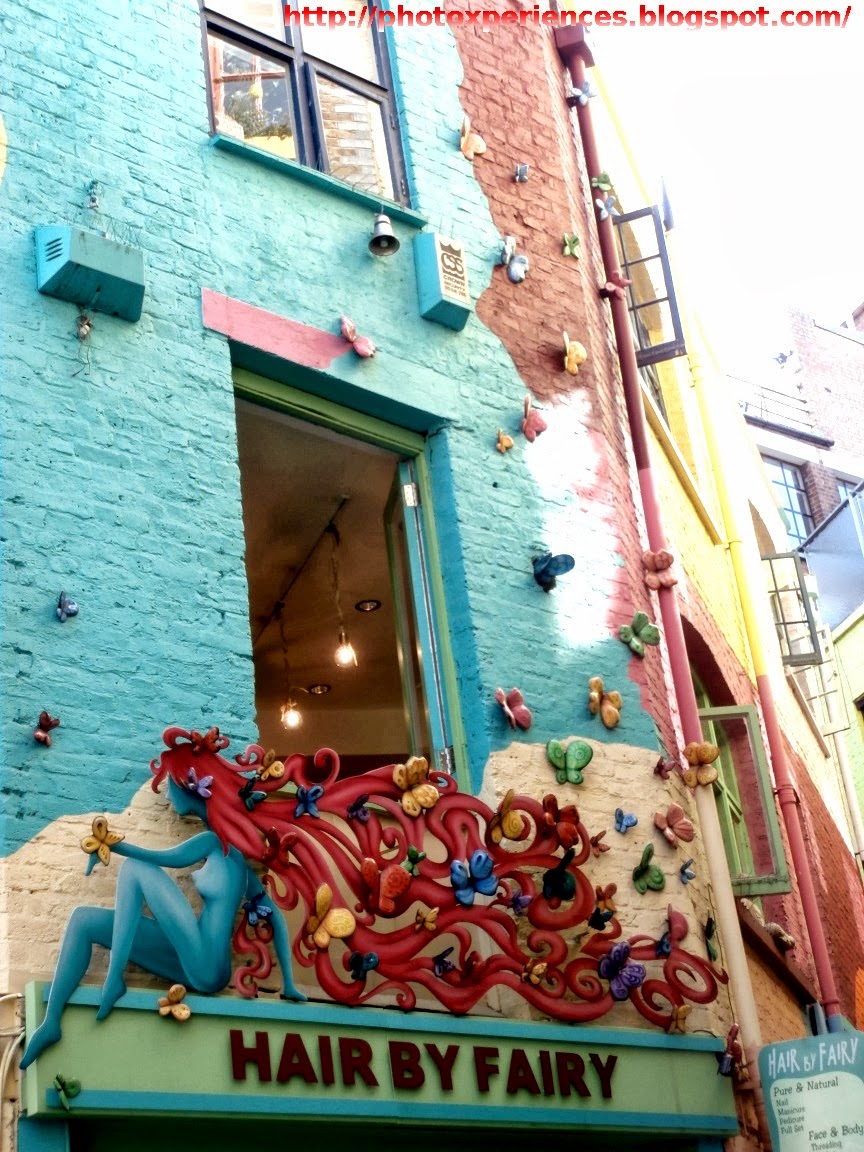
  Facade of Hair by Fairy, a hairdresser's in Neal's Yard, London. Fachada de Hair by Fairy, una peluquería en Neal's Yard, Londres. Lovely lane at Neal's Yard, London. Encantadora calleja en Neal's Yard, Londres.

¿Y qué otros establecimientos encontraremos entre estos hermosos edificios de coloridas fachadas? Pues además de las tiendas abiertas por Nicholas Saunders, a éstas se han añadido otras como Neal’s Yard Salad Bar (un restaurante vegetariano), Neal’s Yard Deli (comida orgánica y vegetariana), Bead Aura (piezas y útiles para confeccionar joyas y accesorios), La Piazetta (un restaurante italiano), The Walk In Back Rub (masajes), Homeslice (pizzería), o Neal’s Yard Meeting Rooms (un lugar para reuniones, conferencias, fiestas, presentaciones). 

What other facilities will we find in this alley which opens into a courtyard surrounded by beautiful buildings of colorful facades? As well as the shops opened by Nicholas Saunders, to these were added others such as Neal 's Yard Salad Bar (a vegetarian restaurant ), Neal 's Yard Deli (organic and vegetarian food ), Bead Aura (parts and supplies for making jewelry and accessories ), the Piazzetta (Italian restaurant ), the Walk In Back Rub (massages), Homeslice (another pizzeria) or Neal’s Yard Meeting Rooms (a place for rehearsals, conferences, castings, parties, courses). 

Details of some facades in Neal's Yard, London. Detalles de algunas fachadas en Neal's Yard, Londres.Details of some facades in Neal's Yard, London. Detalles de algunas fachadas en Neal's Yard, Londres.

Wild Food Cafe, Neal's Yard, London. Wild Food Cafe, Neal's Yard, Londres.

También encontraréis los establecimientos de Wild Juicery (zumos, bebidas, cócteles), Slam City Skates (equipación para skaters), Slow Food (restaurante naturista), Hair by Fairy (una peluquería hippie con un gran hada en la puerta), Stuart Phillips (otra peluquería), Wild Food Café (un café vegetariano), o la pastelería Neal’s Yard Bakery, 

You’ll also find the establishments of Wild Juicery (juices, beverages, cocktails), Slam City Skates (equipment for skaters), Slow Food (naturist restaurant), Hair by Fairy (a hippie hairdresser with a big fairy in the door), Stuart Phillips (another hairdresser ), Wild Food Café (vegetarian coffee), or Neal 's Yard Bakery. 

Si os están entrando ganas de visitarlo, deberéis tener en cuenta que se trata de un rincón escondido, del que si no sabes su localización exacta, puedes pasar de largo sin descubrirlo, a pesar de que se encuentra a pocos minutos andando desde las estaciones de metro de Covent Garden y de Leicester Square. 

If you’re feeling like going there, you’ll have to keep in mind that this is a hidden corner. If you don’t know its exact location, you may well pass by without discovering it, even though it’s a few minutes walk from the subway stations of Covent Garden and Leicester Square. 

Details of some facades in Neal's Yard, London. Detalles de algunas fachadas en Neal's Yard, Londres. Some terraces in the center of the square of Neal's Yard, London. Algunas terrazas en el centro de la plaza de Neal's Yard, Londres.

En realidad, dicen que sus exclusivos habitantes prefieren conservar en secreto la ubicación de su santuario, escondido tras una laberinto de difícil acceso, para preservarlo del turismo masivo. 

Actually, it’s said that their unique inhabitants prefer to keep secret the location of their sanctuary, hidden away behind a maze of difficult access, to preserve it from mass tourism. 

  Small alley entrance to Neal's Yard, London. Pequeño callejón de entrada a Neal's Yard, Londres. Small alley entrance to Neal's Yard, London. Pequeño callejón de entrada a Neal's Yard, Londres.

Así, las únicas formas de llegar a él son un pasadizo estrecho que sale de Monmouth Street, y un callejón que conecta con Shorts Gardens (con una entrada del que cuelgan unos barriles). En ambos casos, ninguna de los dos accesos dejan intuir lo que se esconde a la salida de ambos. 


So, the only 2 ways to get to it is a narrow passage from Monmouth Street, and an alley from Short's Garden (with an entry with hanging barrels). In both cases, neither of the two access gives a hint of what’s hidden beyond. 

Colouful buildings at Neal's Yard, London. Edificios multicolor de Neal's Yard, Londres.

Confío en que, con estas pistas consigáis llegar a este patio, del que seguro guardaréis un grato recuerdo. 

I’m confident that, with these tracks you’ll reach this courtyard, from which surely you’ll keep a pleasant memory. 


Eso sí, ¡no se lo contéis a demasiada gente! 


But do not tell it to too many people!


Colouful buildings at Neal's Yard, London. Edificios multicolor de Neal's Yard, Londres.

Y si estás pensando en viajar a Londres, puedes visitar mi blog La vuelta a Londres en siete días.

miércoles, 8 de mayo de 2013

Guadalupe. Un hermoso monasterio. A beautiful monastery.


Artesanía típica de Guadalupe - Guadalupe traditional craftsGuadalupe es una población española, situada en la comarca de las Villuercas de la provincia de Cáceres (Comunidad Autónoma de Extremadura). Fue fundada en el siglo XIII, y cuenta actualmente con 2.000 habitantes.


Guadalupe is a Spanish municipality, located in the region of Las Villuercas of the province of Cáceres (Autonomous Community of Extremadura). It was founded in the thirteenth century, and currently has 2,000 inhabitants.


Calles con soportales de madera y balcones floridos - Streets with typical wooden porches and balconiesDebe su nombre al río Guadalupe, que discurre cerca de la población. El origen de este nombre procede el árabe Was-al-luben, que significa río escondido. Hay quien defiende que la palabra es un híbrido de Wad-al (río en árabe) y lupus (lobo en latín), pero es una interpretación menos sostenible.


It owes its name to the Guadalupe River, which runs near the village. The origin of this name comes from the Arabic Was-al-Luben, meaning hidden river. Some argue that the word is a hybrid of Wad-al (river in Arabic) and lupus (wolf in Latin), but this is a less tenable interpretation.

Exterior del monasterio - Outside the monasteryPodemos encontrar, entre sus preciosas calles con típicos soportales de madera y balcones floridos, numerosos e interesantes monumentos: el Colegio de Infantes, la Enfermería de Monjes, el Hospital de San Juan Bautista, el Hospital Nuevo, el Hospital de San Juan, donde en 1442 se practicó por primera vez en España la cirugía y la disección por cirujanos frailes y seglares, la Iglesia de la Santa Trinidad, varios arcos de la muralla medieval, y la antigua judería que se ubica alrededor de la Plazuela de los Tres Chorros. Y entre todos ellos sobresale el Real Monasterio de Santa María de Guadalupe.


We can find many interesting mouments among its beautiful streets with typical wooden porches and balconies with flowers: the Infants College, the Monks Nursing, the Hospital of St. John the Baptist, the New Hospital, the Hospital of San Juan, where in 1442 was performed for the first time in Spain a dissection surgery, the Church of the Holy Trinity, arches of the medieval wall, and the old Jewish quarter that is located around the Square of the Three Jets. And between them stands the Royal Monastery of Santa Maria de Guadalupe.

Templete de claustro y torre defensiva - Temple of cloister and defensive tower


El Monasterio acoge la estatua de la Virgen de Guadalupe. Esta Virgen tiene una importancia notable ya que se convirtió en un poderoso símbolo de la cristianización de gran parte del Nuevo Mundo. Si bien el monasterio estuvo habitado en un principio por monjes jerónimos (siglos XIV-XV), actualmente está regentado por franciscanos.

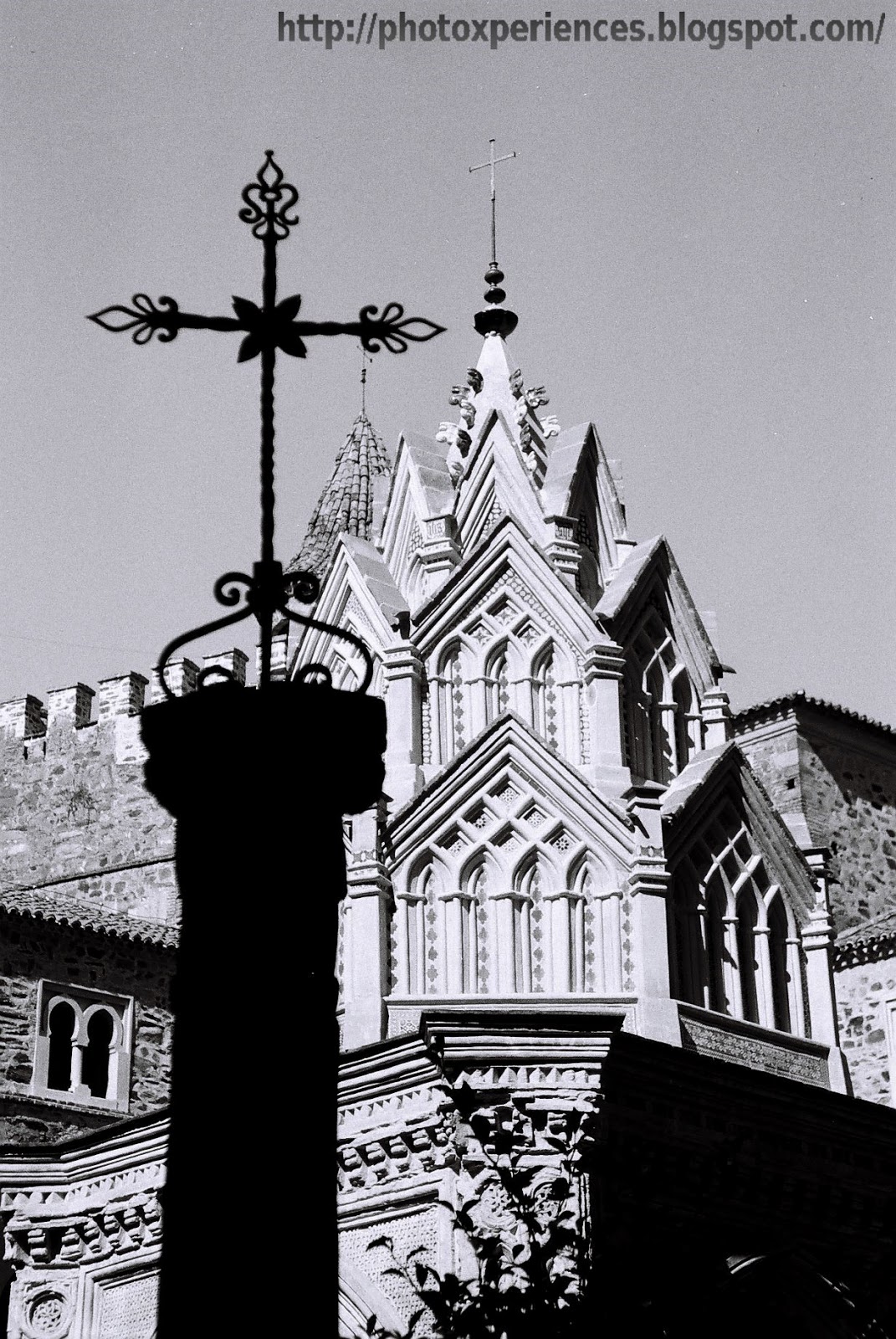
Claustro de los Milagros - Cloister of Miracles Templete gótico mudéjar - Small temple of Mudejar Gothic style

The monastery houses the statue of the Virgin of Guadalupe. This Virgin has a significant importance as it became a powerful symbol of the Christianization of much of the New World. Although the monastery was inhabited initially by Hieronymite monks (XIV-XV centuries), it’s currently run by Franciscans.

Torre de Santa Ana - Tower of Santa Ana

Fachada principal del templo - Main façade of the templeEstá construida sobre el emplazamiento de una antigua ermita de finales del siglo XIII. A ésta le sucedió una iglesia de estilo mudéjar (siglo XIV), y la actual fue edificada en 1403, realizándose sucesivas ampliaciones hasta el siglo XVIII. Ello hace que en el conjunto del monasterio podamos observar elementos mudéjares, góticos, renacentistas, barrocos y neoclásicos.


It’s built on the site of an ancient shrine of the late thirteenth century. Later there was a Mudejar style church (XIV century), and the current one was built in 1403, going through successive enlargements until the eighteenth century. This means that on the whole monastery we will observe Moorish, Gothic, Renaissance, Baroque and Neoclassical elements.


Dentro del conjunto monumental que integra el Monasterio destacan la Iglesia gótica de Nuestra Señora (siglo XIV), con retablo y decoración barroca; el Camarín de la Virgen con pinturas de Luca Giordano; la Sala Capitular; la Sacristía y Capilla de San Jerónimo, con cuadros famosos de Zurbarán; el Comedor de la Hospedería; el Museo de Bordados (en el antiguo refectorio); sus Museos de pintura y escultura, con obras de Juan de Flandes, Zurbarán, Goya, y el Greco, entre otros; y el Museo de libros miniados, situado en el claustro mudéjar y que alberga una colección de grandes libros de coro miniados de los siglos XV-XVI provenientes del scriptorium del propio monasterio y considerada entre los mejores del mundo; y un Claustro gótico. Todo este conjunto está fortificado y rodeado por ocho torres defensivas entre las que destacan las de Santa Ana, la de Portería y la de las Campanas.


Claustro del Real Monasterio de Santa María de Guadalupe - Cloister at the Royal Monastery of Santa Maria de GuadalupeAmong the monuments that integrates the monastery it’s included the Gothic Church of Our Lady (XIV century), with Baroque decoration and altarpiece; the Chapel of the Madonna, with paintings of Luca Giordano; the Chapter House; the Sacristy and the Chapel of St. Jerome, with famous paintings by Zurbarán; the Dining Room of the Guesthouse; the Embroidery Museum (in the old refectory); its museums of paintings and sculpture, including works by Juan de Flandes, Zurbarán, Goya, and El Greco, among others; the Museum of illuminated books, which houses a collection of large illuminated choir books of the XV-XVI from the scriptorium of the monastery itself, considered among the best in the world; and the Gothic cloister. This set is fortified and surrounded by eight defensive towers among which are those of St. Anne, the Porter tower, and the Bells tower.

Escudo de armas antiguo - Ancient coat of arms


Entre todas sus dependencias destaca el magnífico Claustro de los Milagros, de estilo gótico mudéjar. Fue construido entre por fray Juan de Sevilla 1389 y 1405. Se compone de dos plantas de forma rectangular, que dan paso a los dormitorios y el refectorio. En sus paredes se expone una colección de cuadros relacionados con los milagros de la Virgen.

Claustro gótico mudéjar - Mudejar Gothic cloister

We can find, among all its dependencies, the magnificent Cloister of Miracles, of Mudejar Gothic style. It was built by Fray Juan de Sevilla from 1389 to 1405. It consists of two rectangular floors, that lead to the bedrooms and refectory. On its walls it’s exposed a collection of pictures related to the miracles of the Virgin.


Cuenta con un pequeño templete en su centro, construido con barro cocido y ladrillo, decorado con azulejos y yeserías, y coronado con una flecha de cerámica blanca y verde, que se prolonga en un cruz de hierro.

Torre de las campanas y rosetón mudéjar - Tower of the Bells and Mudejar Rosette Detalle del templete - Detail of the small temple

It has a small temple at its center, built with clay and brick, decorated with tiles and plasterwork, and crowned with an arrow with white and green ceramic, which is extended by a cross of iron.


Fachada principal del Monasterio de Guadalupe - Main façade of the Guadalupe MonasteryEste monasterio fue en 1486 el escenario del encuentro entre Cristóbal Colón y los Reyes Católicos para que éstos financiaran el viaje a las Indias. En 1492, cuando la reina Isabel la Católica acudió al monasterio para dar las gracias por la rendición de Granada, tomó la decisión de hacer entrega a Colón de dos carabelas. Éste, en su primera expedición a América se encomendó a la Virgen de Guadalupe y le dio su nombre a una isla del Caribe.


In 1486 this monastery was the scene of the encounter between Christopher Columbus and the Catholic Monarchs in order to study the inversion of the voyage to the Indies. In 1492, when Queen Isabella went to the monastery to give thanks for the surrender of Granada, she made the decision to hand over two caravels to Columbus. This one, on his first expedition to America, was entrusted to the Virgin of Guadalupe and gave its name to a Caribbean island.

Pináculos - Pinnacles Portada del Monasterio - Main facade of the Monastery

Por todo lo expuesto, la Unesco decidió en 1993 inscribir el Monasterio de Guadalupe en la lista del Patrimonio de la Humanidad.


Escalera de acceso a la basílica - Stairway to the basilica

For all these reasons, in 1993 UNESCO decided to inscribe the Monastery of Guadalupe on the World Heritage List.

Magnífico templete del Real Monasterio de Santa María de Guadalupe - Magnificent temple of the Royal Monastery of Santa Maria de Guadalupe


sábado, 5 de enero de 2013

La fortaleza roja - The red fortress (II)

La Alhambra. The Alhambra.

Torres y muralla de la Alhambra. Towers and defensive walls of the Alhambra. Granada. Spain.

El conjunto de la Alhambra es algo más que una fortaleza: dentro de su muralla encontramos palacios reales, jardines, torres, puertas, baños públicos, mezquitas, comercios, etc. Toda una ciudad pensada para cubrir las necesidades de la corte de la dinastía nazarí. Consta de varias zonas diferenciadas, todas ellas extraordinariamente interesantes para visitar: la Alcazaba, los Palacios Nazaríes, el Palacio de Carlos V, el Partal y el Generalife.


The palace complex of the Alhambra is more than a fortress: within the walls we’ll find royal palaces, gardens, towers, mTheosques, shops, gateways, bathhouses, etc. The whole city was designed to meet the needs of the Nasrid dynasty. It consists of several distinct areas, all extremely interesting to visit: the Alcazaba, the Nasrid Palaces, the Palace of Charles V, the Partal and the Generalife.

La Alcazaba. The Alcazaba.


Torre de Comares desde la Alcazaba. Tower of Comares from the Alcazaba (citadel). Alhambra. Granada. Spain.
La Alcazaba es el recinto militar fortificado, probablemente construido sobre los restos de una fortificación romana preexistente. Aquí encontramos la Torre redonda del Cubo, las mazmorras, la Plaza de Armas (donde antiguamente se encontraban las casas de los soldados de élite al servicio del Sultán), la Torre de la Pólvora, la Puerta de Armas y la Torre de la Vela, con extraordinarias vistas sobre el Valle del Darro y la ciudad de Granada y sus barrios históricos (el Albaicín y el Sacromonte).


The Alcazaba (citadel) is the fortified military compound, probably built on the remains of a preexisting Roman fortification. Here we can find the round Tower of the Cube, the dungeons, the Parade Ground (where once there were the homes of the elite soldiers in the service of the Sultan), the Powder Tower, the Arms Gate, and the Watchtower of the Candle, with stunning views over the valley of river Darro and the city of Granada and its historic neighborhoods (Albaicin and Sacromonte).

Los Palacios nazaríes. The Nasrid Palaces


Patio de los Arrayanes. Court of the Myrtles. Alhambra. Granada. Spain.
Es el conjunto de palacios que constituía la residencia de los reyes de Granada. El palacio real nazarí se concibe como un espacio íntimo, en el que la sobriedad exterior contrasta con la delicadeza del interior, donde los elementos arquitectónicos se tornan puramente ornamentales. Los tres palacios que forman este recinto son: el Mexuar, el Palacio de Comares o de Yusuf I, y el Palacio de los Leones o de Mohammed V.

Fachada del Cuarto Dorado. Golden Room facade. Alhambra. Granada. Spain.
It’s the set of palaces which were the residence of the kings of Granada. The islamic royal palace is conceived as an intimate space, where the robustness and austerity of the exterior panels harmonizes with the fragility of the interior, where the architectural elements become purely ornamental. Three palaces form this set: the Mexuar, the Palace of Comares or Yusuf I, and the Palace of the Lions or of Mohammed V. 

Estanque de la Alhambra. Pond in the Alhambra. Granada. Spain.

Estos palacios están interconectados por varios patios, que se conforman como jardines interiores, con elementos de inspiración bizantina, persa y musulmana. Los patios son el anticipo del paraíso, un deleite para los sentidos, con el agua como elemento principal, corriendo cristalina entre los mármoles de las fuentes como representación viva de la pureza del alma. Destacamos entre ellos el de Arrayanes, el de Mexuar y el de Lindaraja.


These palaces are interconnected by some courtyards (Patios), which are shaped as constant allusions to gardens, with Byzantine, Persian and Muslim inspired elements. The courtyards are a taste of paradise, an oasis of nomadic sense gratification, with water as main element, running crystalline between the marbles of the fountains as a live symbol of the purity of the soul. Some outstanding examples are the Court of Mexuar, the Court of Myrtles, and the Court of Lindaraja. 


Estanque del Partal y Torre de las Damas. Pool in the Partal and Tower of the Damas. Alhambra. Granada. Spain.
El patio que articula toda la zona palatina de la Alhambra es el magnífico Patio de los Arrayanes, uno de los grandes santuarios del arte mundial, puerta de entrada al Palacio de Comares donde se ubicaba el Salón del Trono. Así, todas las embajadas que acudían a Granada quedaban deslumbradas al pasar a través de este estanque de gran luminosidad, en cuyas aguas quietas se reflejan las columnas de la galería norte, la soberbia torre de Comares y el cielo y sus nubes, todo ello adornado con el dulce aroma que emana de los setos de arrayán que flanquean el estanque.


The magnificent Courtyard of the Myrtles is the one that links all the palatine zone of the Alhambra, one of the great shrines of world art. It’s the entrance hall to the Palace of Comares, where the Nasrid court placed the Throne Room. That way, all the embassies feel dazzling when they pass through this pond of still waters in which they can see reflected the columns of the north gallery, the splendid Tower of Comares, and the sky and clouds, all adorned with the sweet aroma emanating from the myrtle hedges flanking the reflecting pool. 

Patio de los Arrayanes desde el Salón del Trono. Court of the Myrtles from the Throne Hall. Alhambra. Granada. Spain.

El Mexuar era un palacio funcional, de decoración modesta, donde se impartía justicia, y donde se celebran los Consejos de Ministros. Contiguo a él encontramos una pequeña mezquita, y el Cuarto Dorado, de bella techumbre.

The Mexuar was a functional palace, modest in décor, where justice was imparted, and hosted the Councils of Ministers. Next to it we find a little mosque, and the Golden Room, with a gorgeous ceiling.

Detalle de la decoración hispano-musulmana. Detail of the Spanish-Muslim decoration. Alhambra. Granada. Spain.

El Palacio de Comares acogía el Salón del Trono o de los Embajadores, la mayor estancia del recinto, además de 9 pequeñas alcobas. En este salón el Sultán recibía a sus súbditos. Es un resumen de la exquisitez y la delicadeza del arte hispano-musulmán. La cúpula que cubre la sala representa los siete cielos del paraíso islámico, y es un bello corolario para una sala cuyas paredes se tiñen de historia. Fue en este escenario donde Boabdil, el último califa nazarí entregó a los Reyes Católicos Isabel y Fernando las llaves de la ciudad, donde éstos confirmaron a Cristóbal Colón como almirante del Nuevo Mundo, y donde el emperador Carlos V decidió implicarse en varias de sus empresas bélicas.


Vistas de Granada desde el Cuarto Dorado. View of Granada from the Golden Hall. Alhambra. Granada. Spain.
The Palace of Comares accomodates the Throne Room or Hall of the Ambassadors, the largest room of the palace, along with 9 small alcoves. In this room the Sultan received his subjects. It’s a summary of the refinement and delicacy of the Spanish-Muslim art. The dome covering the room represents the seven heavens of Islamic paradise, and is a beautiful corollary to a room whose walls are pure history. It was in this setting that Boabdil, the last Moorish Caliph, gave the Catholic Monarchs Isabella and Ferdinand the keys to the city, where Christopher Columbus received Isabel and Ferdinand’s support to sail to the New World, and where the Holy Roman Emperor Charles V decided to engage on many of their military companies. 


Patio de los Leones. Court of the Lions. Alhambra. Granada. Spain.
El Palacio de los Leones, a diferencia del anterior, de carácter público y ceremonial, era el refugio privado del Sultán, de su familia y de su harén. En su centro encontraremos el famoso Patio de los Leones. Todo en este patio tiene su simbología: dicen que representa el Paraíso, bañado como éste por cuatro ríos, que fluyen desde los cuatro puntos cardinales hasta la fuente central, donde doce leones de mármol blanco, y de cuyas bocas manan surtidores de agua, representan los doce signos del Zodíaco. El patio está rodeado por un impresionante bosque de 124 columnas de mármol que dan paso a las distintas estancias del Palacio.

Patio de los Leones. Court of the Lions. Alhambra. Granada. Spain.
The Palace of the Lions, unlike the previous one with a remarkable public and ceremonial character, was the private retreat of the Sultan, his family and his harem. In its center we find the famous Court of the Lions. Everything in this courtyard has its symbolism: it’s said it represents Paradise, bathed like this by four rivers, which flow out from the cardinal point rooms to come together to the central fountain, where twelve lions in white marble produce water from its mouth, representing the twelve signs of the Zodiac. The courtyard is surrounded by an impressive forest of 124 marble columns, which lead to the different rooms of the palace. 


En el Palacio de los Leones encontramos la Sala de los Mocárabes, vestíbulo o recepción del palacio; la Sala de los Reyes, la ala de los Abencerrajes, la Sala de las Dos Hermanas, la Sala de los Ajimeces, y el Mirador de Lindaraja. En todas ellas los alarifes agotaron todas las artes decorativas de su tiempo siguiendo el lema del ‘paraíso en la tierra’, no habiendo durante décadas monumento en el mundo que compitiera con su belleza.

Cúpula de mocárabes en la Sala de los Abencerrajes. Muqarnas dome of the Hall of Abencerrages. Alhambra. Granada. Spain.
In the Palace of the Lions we find the Room of the Muqarnas, or reception hall of the palace, the Hall of Kings, the Hall of Abencerrages, the Hall of the Two Sisters, the Ajimeces Room, and the viewpoint of Lindaraja. In all of them the builders, artisans and craftsmen ran out all the decorative arts of his time following the consistent theme of ‘paradise on earth’, as for decades there was no monument in the world to compete with its beauty. 


De todas ellas, destaca la Sala de los Abencerrajes, impresionante por su cúpula de mocárabes en forma de estrella de ocho puntas abriéndose sobre ocho trompas y por su no menos interesante leyenda. El nombre de ‘Abencerrajes’ hace referencia al apellido de una familia de la nobleza de la época, rivales políticos de otra familia, los ‘Zenetes’, los cuales conspiraron contra ellos inventándose una relación amorosa entre la sultana y uno de los Abencerrajes. Así, el sultán, cegado por los celos, celebró una fiesta en esta sala, invitando a toda la familia, y haciendo decapitar sobre su fuente a los 37 caballeros de la misma. De tal forma, se dice que el color rojizo que aun hoy día se puede contemplar en la taza de la fuente, y en el canal que lleva su agua hasta la fuente del Patio de los Leones, se debe a las manchas de la sangre de los caballeros asesinados...


Patio de los Leones. Court of the Lions. Alhambra. Granada. Spain.
Among them, the Hall of Abencerrages, impressive for its muqarnas (stalactite ceiling decorations) dome with eight-pointed stars, and for its no less interesting legend. The name 'Abencerrages' refers to the surname of a noble family of the time, political rivals of another family, the 'Zenetes', which conspired against them through inventing a relationship between one of the Abencerrages and the Sultan's wife. Then, the Sultan, blinded by jealousy, arranged a banquet in this chamber, invited the whole Abencerrages family, and decapitated the 37 knights of the family. Thus, it’s said that the reddish color that even today can be seen in the basin of the fountain, and in the water channel leading to the source of the Court of the Lions, is due to blood stains of the knights killed ...


El Partal. The Partal.


Saliendo de esta zona palaciega, encontramos los Jardines del Partal, uno de los lugares más hermosos de la Alhambra, que comparte espacio con el terreno antiguamente ocupado por las viviendas de los militares y criados al servicio del palacio, la Torre de las Damas, los restos del Palacio de Yusuf III, las Torres de la Cautiva y de las Infantas (románticos escenarios de algunos de los cuentos de Washington Irving), y el cementerio real o Rauda.
Jardines del Partal. Partal gardens. Alhambra. Granada. Spain.
Leaving this palace area, we can find the gardens of Partal, one of the most beautiful places in Alhambra, which shared space with dwellings formerly occupied by the military and the palace servants, the Damas tower, the remains of the palace of Yusuf III, the towers of the Captive and the Princesses (romantic scenaries of some of the stories of Washington IrvinWashington Irvingg), and the royal cemetery or Rauda.


El Palacio de Carlos V. The Palace of Charles V


Palacio de Carlos V. Palace of Charles V. Alhambra. Granada. Spain.
El Palacio de Carlos V representa el símbolo del triunfo de la Cristiandad sobre el Islam. Fue mandado construir por el emperador CarlosV y la emperatriz Isabel de Portugal con la idea de establecer en él la corte y la capital de su imperio, aunque sus continuas guerras por toda Europa le llevaron finalmente lejos de Granada.
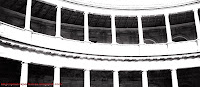
Palacio de Carlos V. Palace of Charles V. Alhambra. Granada. Spain.

The Palace of Charles V represents the symbol of the triumph of Christianity over Islam. Its construction was ordered by Emperor Charles V and Empress Isabella of Portugal, with the idea of establishing in it the court and the capital of their empire, but their continuous wars throughout Europe finally kept them away from Granada. 

El Generalife. The Generalife.


Vista general de la Alhambra desde el Generalife. General view of the Alhambra from Generalife. Alhambra. Granada. Spain.
El Generalife se halla a los pies del Cerro del Sol. El nombre parece provenir del árabe Yanat- al- Arif o Jardín del Arquitecto, en una clara alusión simbólica a Dios, Allah, como arquitecto y creador del Universo. En el Generalife, y a los pies de los pabellones blancos encontramos unos amplios jardines donde crecen árboles frutales, olivos, almendros y granados. El Palacio del Generalife constituía la residencia de verano del sultán y su familia, formando parte de un conjunto de almunias y palacios de descanso que la aristocracia nazarí se hizo construir alrededor de la ciudad palaciega de la Alhambra. En uno de sus patios encontraremos el tronco de un ciprés muerto, bajo cuya sombra dicen que se citaba la sultana con con el jefe de la dinastía de los Abencerrajes.
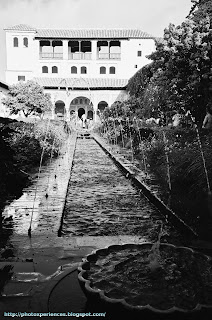
Palacio del Generalife. Palace of Generalife. Alhambra. Granada. Spain.
The Generalife is located at the foot of the Cerro del Sol. Its name seems to come from the Arabic al-Arif Yanat or Garden of the Architect, symbolically referring to God, Allah, as the architect and creator of the Universe. There, at the foot of the white pavilions, we find large gardens where they grow fruit trees, olive trees, almond trees and pomegranates. The Palace of Generalife was the summer residence of the Sultan and his family, as part of a set of almunias (villas) and palaces that the Nasrid aristocracy had built around the palace city of Alhambra. In one of their yards we’ll find the dead trunk of a cypress tree, under whose shade it's said that the Sultan's wife was cited with the head of the Abencerrajes dynasty.